• Skip to main content
  • Skip to primary sidebar

TravelAbility Insider

The Intersection of Travel and Disability

Eliana Satkin

Around the Web

January 14, 2025 by Eliana Satkin

Information and inspiration from around the web.

Delta Recalculates: Making the Flight Map Work for Everyone

Read HERE

Nutcracker Dances Into Sensory-Friendly Territory

Read HERE

Crowdsourcing Inclusion: How Iowa Is Redefining Accessibility Mapping

Read HERE

Wilderness vs. Wheels: The Adirondacks’ Debate on Inclusive Access

Read HERE

Outdoor Freedom: State Parks’ Accessibility Movement

Read HERE

Europe’s Most Accessible Cities

Read HERE

Share this:

  • Share on Facebook (Opens in new window) Facebook
  • Share on LinkedIn (Opens in new window) LinkedIn
  • Print (Opens in new window) Print
  • Share on X (Opens in new window) X

Filed Under: Accessibility, Editorial, The Arts, Tourism, Travel

Top 20 Searched Destinations on Wheel the World (2024)

January 14, 2025 by Eliana Satkin

In 2024, Wheel the World, a leading booking engine for accessible travel, provided insights into the most searched destinations over the past year. This data reflects the growing interest in accessible travel options and highlights the preferences of travelers seeking inclusive experiences.

Top 20 US Destinations

  1. New York, NY
  2. Las Vegas, NV
  3. Miami, FL
  4. Orlando, FL
  5. Maui, HI
  6. Alaska (Statewide)
  7. Honolulu, HI
  8. Chicago, IL
  9. San Francisco, CA
  10. Washington, DC
  11. Los Angeles, CA
  12. Boston, MA
  13. New Orleans, LA
  14. Florida (Statewide)
  15. San Diego, CA
  16. Myrtle Beach, SC
  17. Fort Lauderdale, FL
  18. Nashville, TN
  19. Atlanta, GA
  20. Seattle, WA

Analysis by Region

  • East Coast (35%)
  • West Coast (25%)
  • South (25%)
  • Hawaii & Alaska (10%)
  • Midwest (5%)

Key Observations

1. Diverse Destinations: The list features a mix of urban centers, beach destinations, and natural wonders. Cities like New York and Las Vegas are popular for their vibrant culture and entertainment, while places like Maui and Alaska attract those seeking natural beauty and adventure.

2. East Coast Dominance: The East Coast accounts for 35% of the top destinations searched, indicating a strong preference for major cities like New York, Miami, and Washington, DC. This could be attributed to the region’s rich history, cultural attractions, and accessible transportation options.  

3. Significant Southern Appeal: The South also represents 25% of the top destinations, with Orlando and Miami leading the charge. This reflects the popularity of theme parks, beaches, and warm weather, making it a favored choice for families and vacationers.

4. West Coast Representation: The West Coast, with destinations like San Francisco, Los Angeles, and Seattle, captures 25% of the searches. This region is known for its diverse landscapes, entertainment, tech hubs, and cultural experiences, appealing to a wide range of travelers.

5. Hawaii and Alaska: The inclusion of Hawaii and Alaska highlights the interest in beach and natural outdoor options, catering to those seeking relaxation and adventure.

6. Midwest Underrepresentation: The Midwest only accounts for 5% of the top destinations searched, suggesting that travelers may prioritize coastal and urban experiences over the more rural and less densely populated areas of the Midwest.

Share this:

  • Share on Facebook (Opens in new window) Facebook
  • Share on LinkedIn (Opens in new window) LinkedIn
  • Print (Opens in new window) Print
  • Share on X (Opens in new window) X

Filed Under: Accessible Landing Pages, Mobility, Trends

Accessibility Champions of Change to Watch for 2025

January 14, 2025 by Eliana Satkin

Ross Calladine | HOST

Ross Calladine, Accessibility Inclusion Leader, Visit England.  Revolutionizing Hospitality with Accessibility Tools for the Industry.

Ross has revolutionized the hospitality industry by creating a comprehensive online toolkit that is available for all travel-related businesses in England. His innovative resources empower establishments to enhance accessibility, ensuring inclusive experiences for all visitors, regardless of their needs. By fostering collaboration between businesses and accessibility experts, Calladine has set a new standard for hospitality that prioritizes inclusivity and customer satisfaction.

Our Founders - Ocean Holidays

Harry Hastings, Co-CEO at Ocean Holidays. Pioneering Outbound Accessible Tourism to America.

Harry has significantly impacted the tourism sector with the groundbreaking Accessible Florida tour program in the UK. This initiative in it’s first year, attracted over 6000 passengers and generated over $17mn in revenue, showcasing the market’s potential for inbound accessible travel. Hastings’ commitment to promoting inclusiveness in tourism has inspired other companies to adopt similar programs including TUI, one of  Europe’s three  largest travel companies, which partnered with AccessAble to produce a detailed accessibility guide to 200 hotels.

All Wheels Up — Wheelchair Travel Safety - ABILITY Magazine

Michele Erwin, Founder, All Wheels Up. An Early Champion of Wheelchairs on Flights.

Michele is a relentless advocate for seamless travel experiences for individuals with mobility challenges. Her tireless campaigns have successfully influenced major airlines, including Delta, to accommodate wheelchairs on flights, marking a critical step towards inclusivity in air travel. Erwin’s efforts have not only raised awareness about the barriers faced by travelers with disabilities but have also prompted significant policy changes within the aviation industry, paving the way for the prospect for wheelchairs in the main cabin and fewer in the repair shop.

Steve Nelson, Accessibility Diversity Program Manager, Alaska Airlines. Innovating Accessibility at Alaska Airlines

In 2024, Alaska Airlines has made significant strides in enhancing accessibility for passengers with diverse needs by orchestrating autism practice sessions across multiple cities as well as “Fly for All,” an app with Infiniteach that provides know-before-you-fly simulations. Additionally, Alaska Air has successfully implemented self-driving wheelchairs at Seattle-Tacoma International Airport (SEA), giving passengers a unique experience while addressing a solution to the shortage of airport wheelchair assistants. 

Tami Reist, CEO of North Alabama Mountains and Lakes. Building Inclusive Tourism in North Alabama

Tami has been a strong advocate for inclusive tourism for many years. She has financially supported sensory training for hotels across 16 counties, which included practice overnight stays at the trained hotels. In 2025, her region will host a Familiarization (FAM) tour featuring 10 content creators with various disabilities, including Down Syndrome, mobility, visual and hearing impairments, and PTSD. This initiative will effectively demonstrate the region’s commitment to accessible tourism by creating itineraries tailored for visitors with diverse disabilities, thereby raising awareness about the importance of inclusivity in the hospitality industry.

Destinations International's Chief Diversity Officer on Complex Task Ahead

Sophia Hyder Hock, Chief Inclusion Officer, Destinations International (DI). Leading the DMO Charge for Inclusive Travel.

Sophia Hyder Hock has played a crucial role in advancing accessibility as an essential component of social inclusion, representing the next evolution of Diversity, Equity, and Inclusion (DE&I) initiatives. Under her leadership, (DI) has partnered with TravelAbility to develop The Accessibility Playbook, a comprehensive resource designed to empower their destination members with the essential tools and strategies to ensure that travel experiences are inclusive and accessible for all visitors, regardless of their abilities. Through her leadership, DI is not only enhancing the travel experience for individuals with diverse needs but also promoting a more equitable and inclusive tourism landscape for all.  www.destinationsinternational.org

Gordon Hartman, Founder, Morgan’s Wonderland. Creating a World of Fun for All. 

Gordon Hartman is the visionary founder of Morgan’s Wonderland, the world’s first Ultra Accessible™ theme park, which is located in San Antonio, TX, and is specifically designed for individuals with disabilities but built to be enjoyed by everyone.  Featuring 25 Ultra-Accessible™ attractions,  each of which is thoughtfully designed to ensure that individuals of all abilities can participate and enjoy the fun.

Recognizing the need for Ultra Accommodating™ hotel rooms or accommodations, Morgan’s will break ground in early 2025 on a 95-room hotel property that they believe will be the most accessible hotel in the world. Gordon Hartman is not only changing lives but also advocating for a more inclusive world where everyone can thrive. https://morgans.org/

Rick Hayduk/Rich Davies, Co-Founders, The Shepherd Hotel Downtown Clemson, Clemson, SC. 

Example of Inclusive Employment that also offers a solution for the workforce shortage in Hospitality. Rick and Rich have championed the concept of inclusive employment at The Shepherd Hotel Downtown Clemson, which is leading the way in promoting inclusive employment practices within the hospitality industry. Under their leadership, the hotel has made a significant commitment to hiring individuals with intellectual disabilities, providing them with meaningful job opportunities across a variety of positions. The collaborates with Clemson University’s LIFE program (an Inclusionary Post Secondary pogram for students with IDs), local organizations and community groups to raise awareness about the capabilities of individuals with intellectual disabilities, challenging stereotypes and promoting a more inclusive society. Their efforts have inspired other hotels and businesses to consider similar practices, thereby expanding the impact of their work beyond the hotel itself. Two new Shepherd Hotels are set to open in late 2025, early 2026 (Columbia, SC and Rock Hill, SC).

Dr. Julian Maha, Founder, KultureCity. Passionate Advocate for Sensory Inclusion.

Ten years ago, Dr. Maha co-founded KultureCity, an organization dedicated to promoting sensory inclusion and improving accessibility for individuals with sensory processing needs. Recognizing the need for effective and affordable solutions, KultureCity pioneered a comprehensive sensory inclusion training program that has been successfully implemented in over 5000 locations across the United States, including all NBA arenas, NFL and MLB locations.By raising awareness about sensory processing disorders and the importance of inclusion, he has helped to create a more welcoming atmosphere for individuals with autism, ADHD, PTSD, and other sensory sensitivities.

Nicole Bergstrom, Senior Director at Hilton Hotels. A Committed voice for Accessibility at Hilton Hotels  

Nicole has played a pivotal role in advancing accessibility advocacy within the hospitality industry. Nicole’s journey in accessibility began with her passionate leadership in digital accessibility, where she worked to ensure that Hilton’s online platforms and services are user-friendly for all guests, including those with disabilities. This led to the establishment of a groundbreaking partnership with BeMyEyes, an organization that connects blind and visually impaired individuals with volunteers through a mobile app. This collaboration aims to create accessible environments across all Hilton properties, ensuring that guests with visual impairments feel welcomed and accommodated during their stays. 

Sophie Morgan, Accessibility Columnist, Conde Nast Traveler (UK). 

Amplifying Disability Advocacy Through Media. Sophie Morgan is a prominent TV presenter and provocative disability advocate who has significantly raised awareness and visibility for individuals with disabilities through her engaging media presence and irreverence.  As a correspondent during NBC’s unprecedented coverage of the Paris Paralympic Games, Sophie’s media recognition and fearlessness has drawn attention to the plight of wheelchair travelers everywhere.  Just check out this post  “ Pets Have More Rights on Flights Than We Have.  www.sophiemorgan.com

Sasha Blair-Goldensohn | Architectural Digest

Sasha Blair-Goldensohn, Accessibility and Disability Inclusion Lead, Google Maps

Trailblazer in Accessibility at Google Maps. Sasha has played a pivotal role in transforming Maps into an indispensable tool for finding accessible places, transit and walking routes, and accessibility details for more than 50 million global businesses.

Share this:

  • Share on Facebook (Opens in new window) Facebook
  • Share on LinkedIn (Opens in new window) LinkedIn
  • Print (Opens in new window) Print
  • Share on X (Opens in new window) X

Filed Under: Accessibility Awards, Disability Advocates, Travel Industry People

What Would You Do?

January 14, 2025 by Eliana Satkin

Each month we try to address various accessbility issues that may arise within the TravelAbility community.

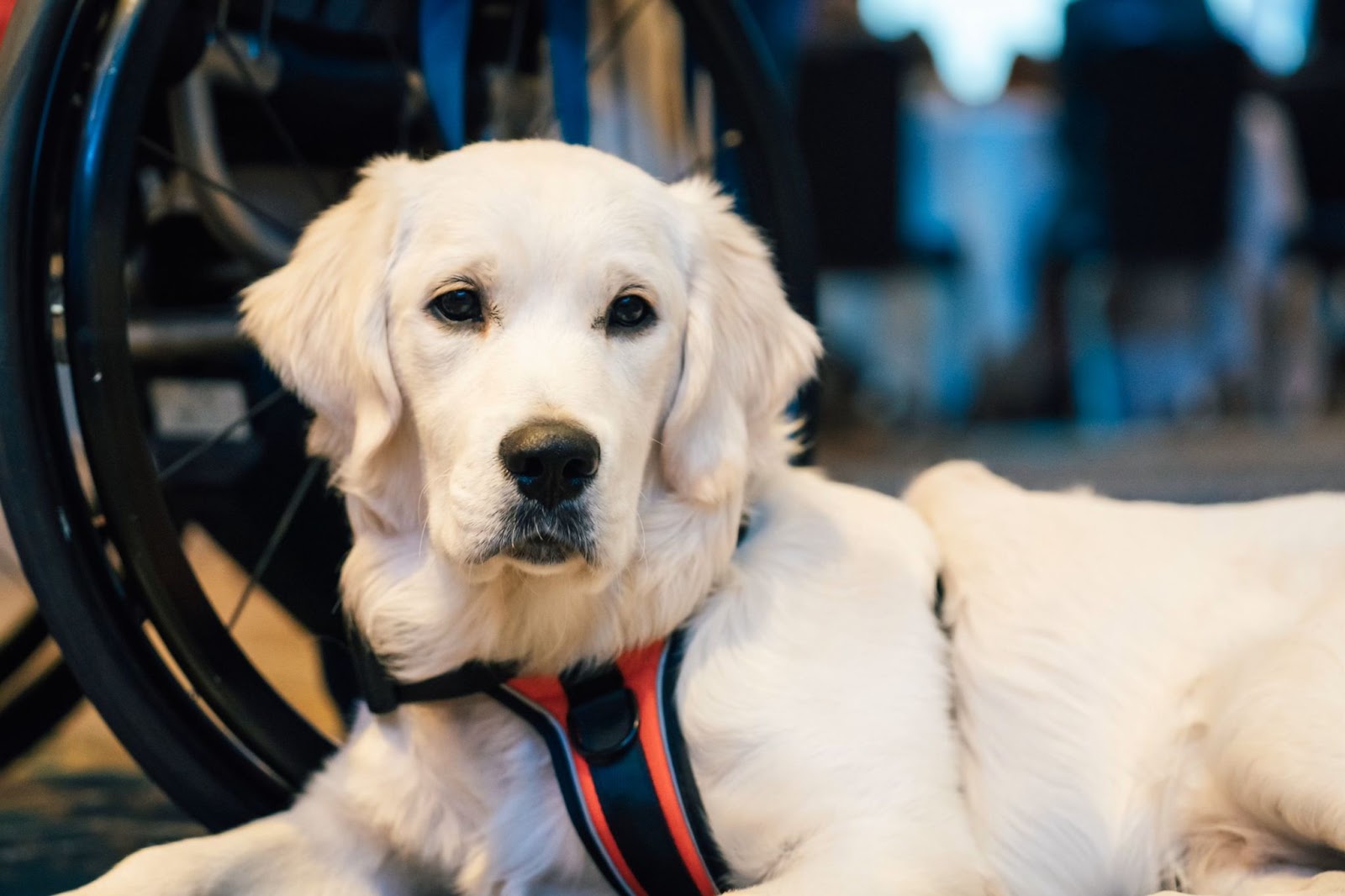
Image courtesy of Kristy Durso

January’s scenario: Is that service dog legit?

You have a hidden disability and are accompanied by Lester, an impossibly cute Golden Doodle that helps you regulate anxiety, moods, and medication needs. Lester is wearing a “Service Dog” vest. While the hotel registration process proceeds without incident, when you enter the restaurant for breakfast the hostess begins to interrogate you about the legitimacy of your service animal. What do you do? What do you say?

Answer: 

Two questions can be asked to determine the legitimacy of a service animal:

  1. Is that a service animal for a disability?
  2. What tasks is it trained to do?

Businesses may not.

  • Require identification
  • Require a vest
  • Charge additional fees
  • Refuse admittance

Businesses can ask a customer to leave if:

  • The animal is being disruptive, aggressive, or out of control.
  • The animal defecates indoors.

A red flag for business owners is if somebody presents a certification. U.S. service dog handlers know that there is no national registry and there is no required certification.

“He helps me stay calm” is not a task. Service animals have specific tasks that they are trained to do. Without being able to provide the specific task the animal is trained to do, the business can ask the person to leave. It is important that these questions are asked. Verifying the legitimacy of a service dog through these questions and behavior helps protect real teams.” Kristy Durso

As a service dog owner, it may be helpful to carry Service Dog Law Cards, reminding others of your rights.


Share this:

  • Share on Facebook (Opens in new window) Facebook
  • Share on LinkedIn (Opens in new window) LinkedIn
  • Print (Opens in new window) Print
  • Share on X (Opens in new window) X

Filed Under: Service Animals

TOP 10 ACCESSIBLE TRAVEL TRENDS FOR 2025

January 14, 2025 by Eliana Satkin

By Jake Steinman

These scenes showcase a vibrant convergence of innovative accessibility solutions, inspiring discussions, and diverse participants dedicated to enhancing travel experiences for individuals with disabilities.

  1. Smart Technology Integration

Leveraging technology is crucial for improving accessibility in travel. Innovations such as:

  • Google Maps “Accessibility Routes”: This feature allows users to find routes that are wheelchair-friendly, making navigation easier for those with mobility challenges.
  • Voice-Activated Hotel Room Controls**: These systems enable guests to control lighting, temperature, and entertainment through voice commands, enhancing comfort and convenience.
  • Digital Assistants for Travel Planning**: Virtual assistants can help travelers plan their trips by providing information on accessible accommodations and attractions.
  • Real-Time Accessibility Information Updates: Travelers can receive timely updates about accessibility features at various locations, ensuring they are well-informed.

Google Maps “Accessibility Routes”: This feature allows users to find routes that are wheelchair-friendly, making navigation easier for those with mobility challenges.

Jake Steinman

2.  Enhanced Transportation Solutions

Transportation is a critical aspect of travel, and ensuring it is accessible for all is essential. Key solutions include:

  • Wheelchair-Accessible Ride-Sharing Services:  While disabled advocates are applying pressure to Uber and Lyft to be more accessible, Waymo, which features driverless Jaguars,  which was a huge hit for TravelAbility attendees in San Francisco, have embraced the disability community with open arms.
  • Modified Rental Vehicles: Rental agencies are adapting their fleets to include vehicles equipped for individuals with disabilities.
  • Enhanced Airport Assistance Programs: Airports are improving their services to assist travelers with disabilities, ensuring a smoother travel experience. 

3. Sensory-Friendly Destinations

  • Creating environments that cater to sensory sensitivities is vital for neurodivergent travelers. Initiatives include:
  • Quiet Spaces in airports and attractions: Designated areas where individuals can retreat to avoid sensory overload.
  • Walmart Quiet Hours Prior to Store Openings: These hours allow individuals with sensory sensitivities to shop in a calmer environment.
  • Specialized Tour Guides for Neurodivergent Travelers: Guides trained to understand and accommodate the needs of neurodivergent individuals.
  • Streaming TV Shows feature life on the Autism spectrum.  The latest entry is the release of “Traveling on the Spectrum.” ttps://travelingthespectrumshow.com/, conceived by TravelAbility advisory board member, Stuart Butler, CMO of Visit Myrtle Beach, is now available on Peacock.

4. Increasing Emphasis on Inclusive Design in Accommodations

The concept of universal design focuses on creating spaces that are accessible to everyone. Notable advancements include:

  • The Schoolhouse Hotel, an all-accessible room hotel in White Sulfur Springs, WV, recently affiliated with Wyndham Hotels, this establishment features accessible amenities.
  • Height-Adjustable Furniture: This allows for flexibility in accommodation, making spaces usable for all guests.
  • Wider Doorways and Corridors: Enhancements that facilitate easier movement for individuals using mobility aids.

5. Virtual Pre-Travel Experiences. Utilizing virtual tools to prepare travelers for their journeys is becoming increasingly popular. Key offerings include:

  • 360° Virtual Tours of Destinations: These immersive experiences allow travelers to explore locations before their visit, helping them make informed decisions.
  • Detailed Accessibility Previews: Travelers can access information about the accessibility features of various destinations, ensuring they are well-prepared.
  • Virtual Reality Hotel Room Tours: These tours provide a realistic view of accommodations offered, allowing guests to assess their suitability.

6.  Adaptive Outdoor Adventure Tourism

  • Adventure travel is being adapted to ensure accessibility for all.
  • Adaptive Sports Equipment: This equipment allows individuals with disabilities to participate in various sports and activities.
  • Accessible Hiking Trails: Trails designed with accessibility in mind enable everyone to enjoy nature.
  • Modified Water Sports Activities: These adaptations ensure that individuals with disabilities can safely engage in water sports.
  • Inclusive Wildlife Viewing Experiences: Tours that cater to diverse needs allow all travelers to appreciate wildlife.

7. Personalized Travel Planning

  • Tailoring travel experiences to individual needs is essential for enhancing accessibility. Key components include:
  • Specialized Travel Agents: Agents trained in accessibility can provide valuable insights and recommendations.
  • Custom Itinerary Development: Personalized itineraries ensure that travelers’ specific needs and preferences are met.
  • Accessibility-Focused Tour Operators: These operators specialize in creating inclusive travel experiences.
  • Detailed Accessibility Guides: Comprehensive guides provide essential information about accessibility features at various destinations.

8. Introducing the Universal Designed Beach 

Enhancing beach experiences for all visitors is a growing focus. Key improvements include:

  • Beach Wheelchair Availability: These specialized wheelchairs from Access Rec, (the original developers of the Mobi Mat), Mobi Mat, and Access Trax offer individuals with mobility challenges an opportunity to experience the beach.
  • Accessible Boardwalks: Boardwalks designed for accessibility ensure that everyone can access beach areas.
  • Modified Water Entry Points: Access points on piers and lakes facilitate safe entry into the water for individuals with disabilities.
  • Sensory-Friendly Beach Areas: Designated spaces that cater to sensory sensitivities provide a more comfortable beach experience.

9. Enhanced Training & Service

  • Training staff to better serve travelers with disabilities is crucial for creating an inclusive environment. Important initiatives include:
  • Staff Disability Awareness Training: Training programs help staff understand the needs of travelers with disabilities.
  • Sign Language-Trained Personnel: Staff trained in sign language can better communicate with deaf and hard-of-hearing guests.
  • Accessibility Ambassadors: These individuals are dedicated to assisting travelers with disabilities, ensuring a positive experience.
  • Specialized Concierge Services: Concierge staff trained in accessibility can provide tailored recommendations and assistance.

10. Greater Representation in Media

  • The representation of individuals with disabilities in media is gaining traction. Key developments include:
  • Accessibility-Focused Content: New streaming movies and television shows are increasingly featuring stories that highlight accessibility.
  • Whalar: This talent agency represents 80 disability content creators, promoting diverse voices in media.
  • Travelability: Introduced speed-dating events with content creators at the 2024 EMS, fostering connections and collaboration.

The travel industry is making significant strides in enhancing accessibility through universal design, virtual tools, adventure tourism adaptations, personalized planning, improved beach access, enhanced training, and greater representation in media. These trends not only improve the travel experience for individuals with disabilities but also promote a more inclusive society where everyone can explore and enjoy the world around them.

Share this:

  • Share on Facebook (Opens in new window) Facebook
  • Share on LinkedIn (Opens in new window) LinkedIn
  • Print (Opens in new window) Print
  • Share on X (Opens in new window) X

Filed Under: Accessibility, Editorial, Trends

  • « Go to Previous Page
  • Go to page 1
  • Interim pages omitted …
  • Go to page 17
  • Go to page 18
  • Go to page 19
  • Go to page 20
  • Go to page 21
  • Interim pages omitted …
  • Go to page 38
  • Go to Next Page »

Primary Sidebar

Subscribe Now to TravelAbility Insider

Get insider accessibility updates right to your inbox

Our promise: Your name and email will never be sold to third parties.

Recent Posts

  • New at the TravelAbility Summit: The Grant Lab

Recent Comments

    Archives

    Categories

    • Accessibility (413)
    • Accessibility Awards (56)
    • Accessibility Champion of Change (10)
    • Accessibility Funding (27)
    • Accessibility Playbook (14)
    • Accessible Experience of the Month (6)
    • Accessible Landing Pages (39)
    • Accessible Meetings (24)
    • Accessible Travel (5)
    • ADA//Law (69)
    • Adaptive Sports (35)
    • Advice Line (7)
    • Advisory Board (25)
    • Airlines (104)
    • Ambassador Report (8)
    • Amputees (6)
    • Around The Web (1)
    • Artificial Intelligence (1)
    • Autism (70)
    • Baby Boomer Travel (9)
    • Best Practices (4)
    • Blind and Low Vision Travel (26)
    • Conferences & Events (81)
    • Content Creators (9)
    • COVID-19 (19)
    • Cruising (11)
    • Deaf abd Hard of Hearing (1)
    • Destination of the Month (6)
    • Destinations (22)
    • Digital Accessibility (35)
    • Disability Advocates (181)
    • Disability Awareness (151)
    • Editorial (76)
    • Education (31)
    • Emerging Markets Summit 2024 (9)
    • EmergingMarketsSummit23 (14)
    • Expert Q&A (56)
    • Explorable Podcast (3)
    • Family Travel (48)
    • Fashion (10)
    • Food (10)
    • Government (29)
    • Hearing (50)
    • Hidden Disabilities (50)
    • Hotel Spotlight (3)
    • Hotels (115)
    • Innovation of the Month (10)
    • Innovations and Products (5)
    • Lived Experience (19)
    • Mental Health (12)
    • Mobility (140)
    • Museums & Attractions (55)
    • Neurodiversity (80)
    • One for the Books (3)
    • Parks and Public spaces (90)
    • Plus Size Travel (6)
    • Products (67)
    • Resources (1)
    • Restaurants (20)
    • Service Animals (10)
    • Speakers 2019 (11)
    • Surveys (9)
    • Sustainability (13)
    • Technology (116)
    • Text-Only Infographic Descriptions (2)
    • The Arts (48)
    • The Business Case (7)
    • Tourism (54)
    • Transportation (77)
    • Travel (259)
    • Travel Industry People (79)
    • TravelAbility 2021 (10)
    • TravelAbility 2022 (9)
    • TravelAbility Events (5)
    • TravelAbility Summit (58)
    • TravelAbility Week 2020 (3)
    • Trends (107)
    • Uncategorized (170)
    • Video of the Month (7)
    • VIRTUAL2020 (4)
    • Vision (71)
    • Vision 2030: The Accessibility Moonshot (1)
    • What would you do? (4)
    • Wheelchair Travel (1)

    An industry service provided by

    Copyright © 2026 · Metro Pro on Genesis Framework · WordPress · Log in

    SUBSCRIBE TODAY!

    Your name and email will never be sold to third parties.

    SUBSCRIBE TODAY!

    Your name and email will never be sold to 3rd parties.

    Loading Comments...

    You must be logged in to post a comment.